
A practical guide for dental, medical, and veterinary practices
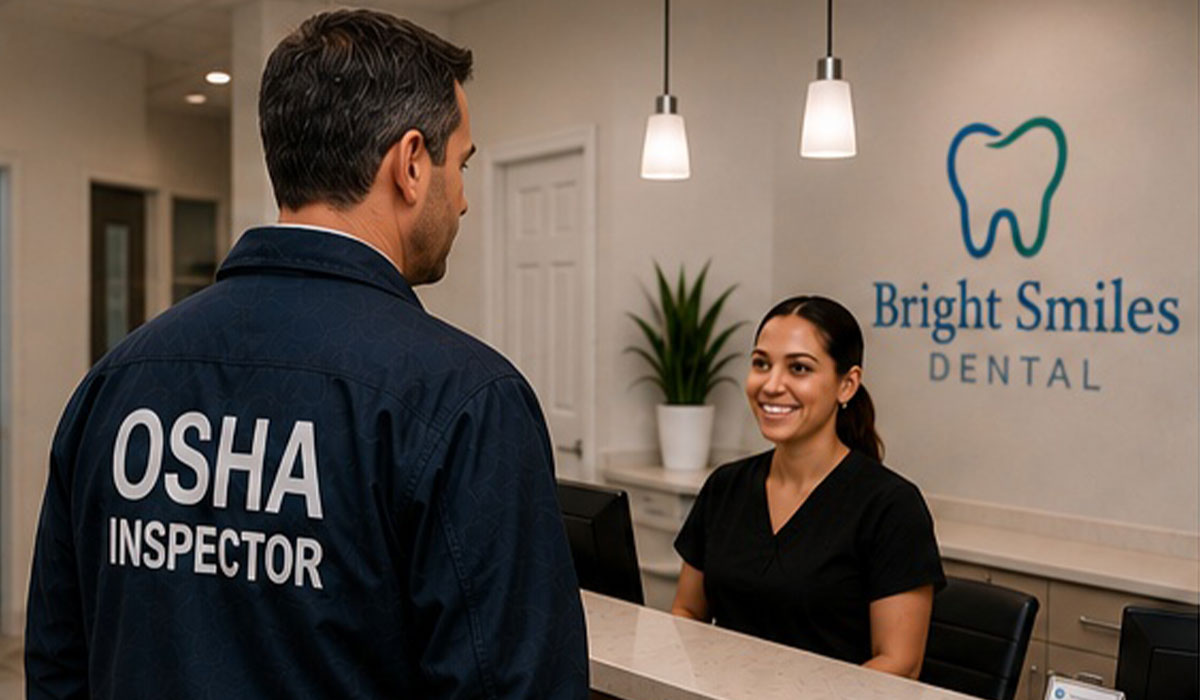
An OSHA inspector has just walked into your practice. What do you do?
For many dental, medical, and veterinary practices, an occupational safety inspection can be stressful. The best response is not to panic or try to “pass” the inspection at the last minute. The best response is to have a documented compliance system, trained employees, current records, and a clear procedure for handling an inspection before an inspector ever arrives.
Important California Distinction
California operates an OSHA approved State Plan administered by the California Department of Industrial Relations through Cal/OSHA. For most private sector workplaces in California, Cal/OSHA is the primary occupational safety and health enforcement agency, although federal OSHA retains authority in certain circumstances and over matters outside the California State Plan. The term “OSHA inspection” is commonly used, but California healthcare practices should be prepared specifically for Cal/OSHA requirements as well.
Why Would Cal/OSHA Inspect a Healthcare Practice?
Cal/OSHA inspections may be initiated for different reasons, including imminent hazards, fatalities or catastrophes, serious injuries or exposures, formal complaints, referrals, and scheduled inspections. The scope can be limited to particular hazards or areas, or it may expand when the inspector identifies information suggesting additional hazards or violations.
What Should You Do When an Inspector Arrives?
Do not panic. Do not argue with the inspector. Do not tell employees to guess at answers. Your first objective is to identify the inspector, notify the person responsible for regulatory inspections, and make sure the practice handles the inspection in an organized and professional way.
- Ask the inspector to present Cal/OSHA identification and exchange business cards or contact information.
- Notify the practice owner, office manager, safety coordinator, or other designated representative immediately.
- Ask the inspector to explain the general purpose and scope of the inspection during the opening conference.
- Have an appropriate management representative accompany the inspector during the walk through.
- Keep a written record of documents requested, areas visited, and issues discussed with the management representative.
- Contact Safety Compliance Experts immediately when your service agreement provides inspection support or emergency assistance.
Cal/OSHA guidance states that inspectors present state identification and explains that permission to enter is normally obtained from an authorized employer representative. If permission is refused, Cal/OSHA may seek an inspection warrant. A practice should not attempt to obstruct an inspection; questions about legal rights or unusual circumstances should be directed to qualified legal counsel.
Step 1: The Opening Conference
The opening conference is where the inspector explains the purpose and scope of the inspection, discusses inspection procedures, and addresses applicable rights. In a complaint investigation, the inspector may be prohibited from revealing information that could identify the complainant or the details of a confidential complaint.
This is an important opportunity for the practice representative to listen carefully and take notes. The goal is not to debate the inspector. The goal is to understand the scope and make sure the practice responds accurately and consistently.
Step 2: The Workplace Walk Through
The inspector may conduct a physical walk through of the workplace. Cal/OSHA guidance states that an inspector may take photographs, conduct interviews, and request documents such as written programs, training records, and injury and illness logs. The employer representative should accompany the inspector.
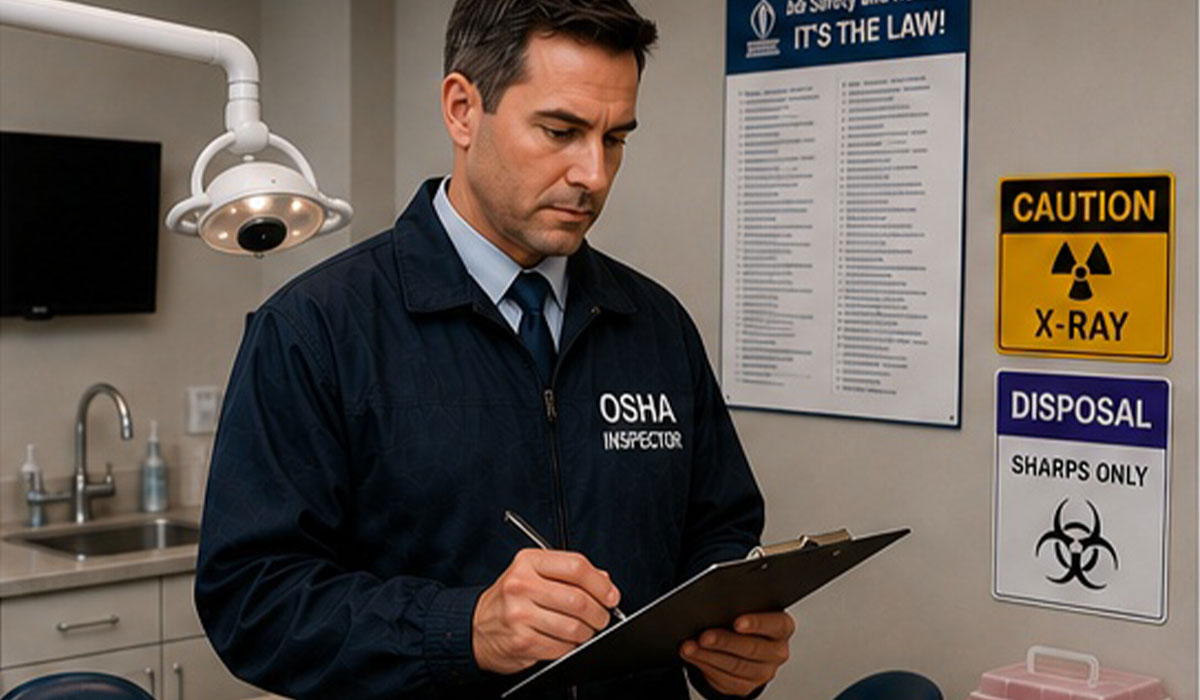
Depending on the reason for the inspection and the operations of the practice, areas and subjects may include:
- Treatment and clinical areas
- Sterilization and instrument processing areas
- Chemical storage and labeling
- Safety Data Sheets and Hazard Communication practices
- Bloodborne Pathogens compliance and exposure control procedures
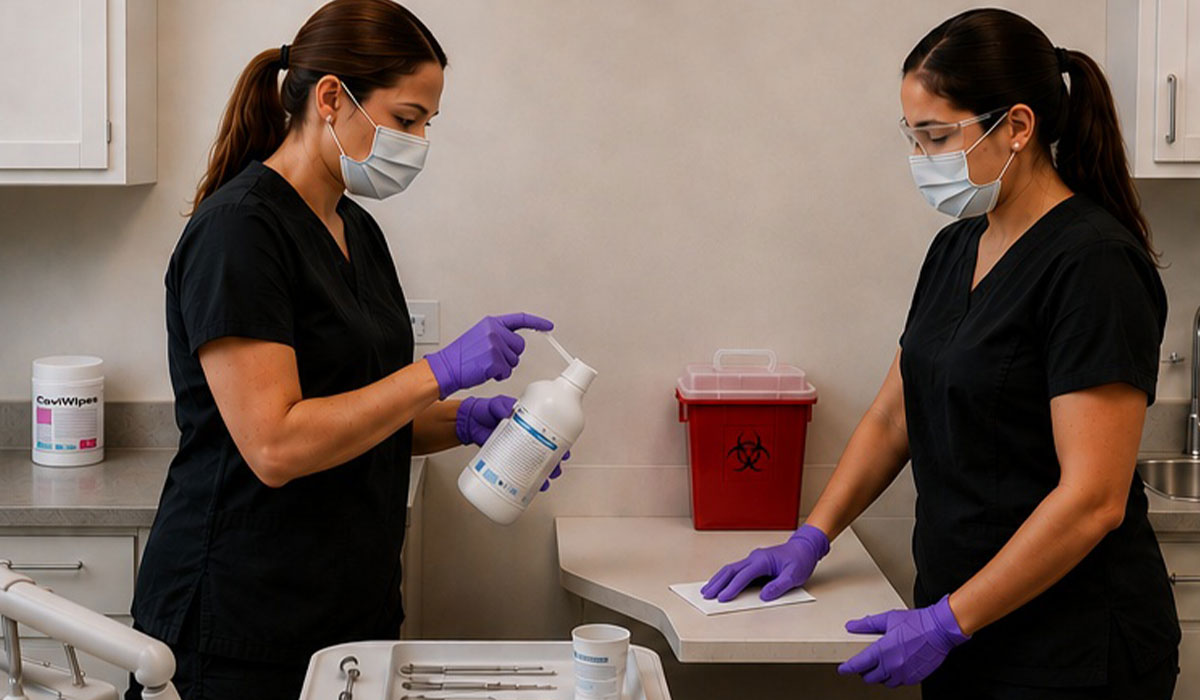
- Personal protective equipment and employee practices
- Sharps safety and regulated waste handling
- Emergency equipment and procedures
- Fire prevention, evacuation, and means of egress issues that fall within applicable requirements
- Workplace conditions and other hazards within the inspection scope
- Required written programs, training documentation, and other records
Step 3: Employee Interviews
Employee interviews can be a significant part of an inspection. Cal/OSHA inspectors may conduct confidential employee interviews, and employees and their representatives have rights to participate in the inspection process. Employees should answer questions truthfully and based on what they actually know and do. They should not be coached to provide a particular answer.
A Practical Rule for Staff
If an employee does not know an answer, it is better to say, “I do not know,” than to guess. The employee can identify the written procedure, training record, supervisor, or other source of information when appropriate.
Step 4: Records and Written Programs
Documentation matters because a practice must not only have safety procedures, it must be able to demonstrate how those procedures are implemented. Depending on the inspection, Cal/OSHA may request written programs, training records, injury and illness records, and other required documents.
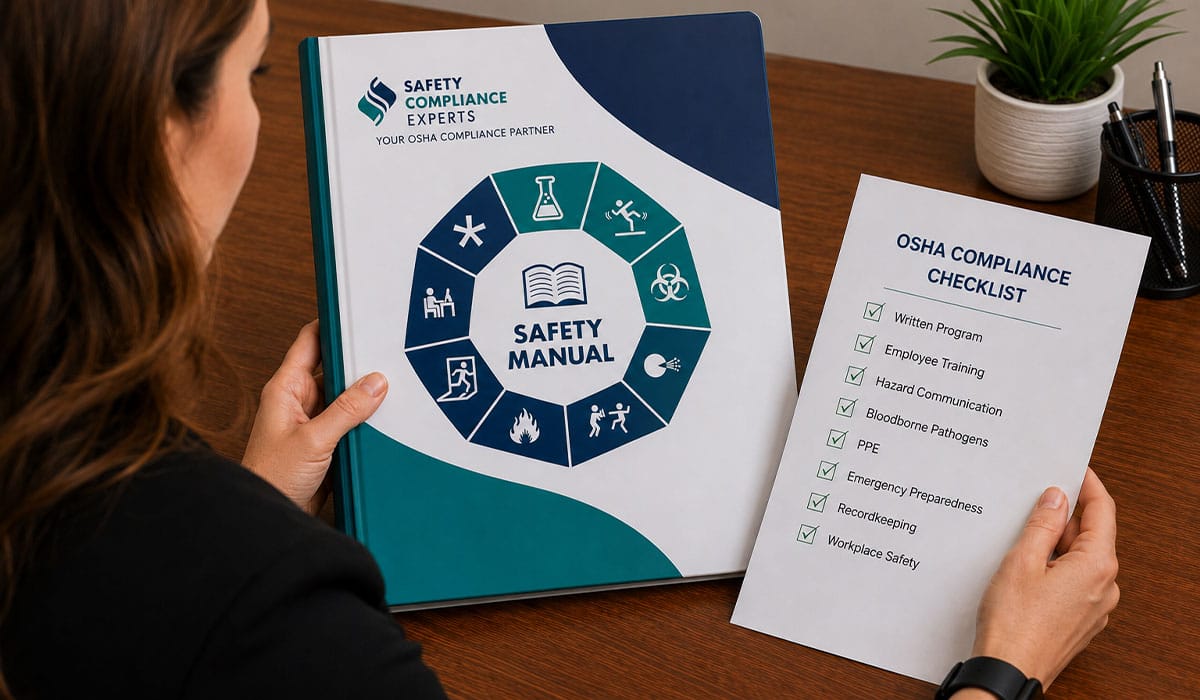
For healthcare practices, compliance documentation may include, when applicable:
- Injury and Illness Prevention Program (IIPP)
- Bloodborne Pathogens Exposure Control Plan
- Hazard Communication Program and current Safety Data Sheets
- Aerosol Transmissible Diseases procedures when applicable to the workplace and covered employees
- Workplace Violence Prevention documentation when applicable under
- California requirements
- Required employee training and certification records
- Exposure incident documentation and follow up records when applicable
- Required safety records and logs
- Inspection, maintenance, and safety documentation appropriate to the practice
The exact documentation required depends on the practice, its employees, exposures, operations, and applicable standards. A compliance program should be customized to the actual workplace rather than relying on a generic manual.
Step 5: The Closing Conference
Before leaving an on site inspection, the inspector may discuss preliminary findings. After the inspection and review of requested information, Cal/OSHA may conduct a closing conference. If citations are issued, the employer receives a citation packet with information about the alleged violations, penalties where applicable, correction requirements, and appeal rights. If no violations are found, Cal/OSHA may issue a written Notice of No Violations.
A citation is not the same thing as an observation made during the walk through. Practices should carefully distinguish preliminary findings from formal citations and follow the instructions contained in any official Cal/OSHA documents they receive.
What Should You NOT Do During an OSHA or Cal/OSHA Inspection?
- Do not obstruct, delay, or interfere with the inspection.
- Do not hide, alter, remove, or destroy records or physical evidence.
- Do not instruct employees to give a particular answer or make a statement that is not accurate.
- Do not guess when you do not know the answer to a question.
- Do not make unsupported statements about compliance.
- Do not assume that every verbal observation will become a citation, but do take observations seriously and address hazards promptly when appropriate.
Why Preparing Before an Inspection Matters
A practice that begins looking for missing records, outdated manuals, unlabeled containers, incomplete training documentation, or unresolved hazards only after an inspector arrives is already under unnecessary pressure. A stronger approach is continuous compliance: scheduled reviews, updated written programs, employee training, documented inspections, and prompt correction of identified problems.
This is especially important in healthcare because compliance involves more than a single document. The written program must match the actual workflow of the practice, and employees must understand and follow the procedures that apply to their work.
How Safety Compliance Experts Helps Healthcare Practices Prepare
Safety Compliance Experts is a leading healthcare compliance company serving dental, medical, and veterinary practices. Our approach is designed to help practices build and maintain an organized OSHA compliance system rather than simply reacting when an inspector appears.
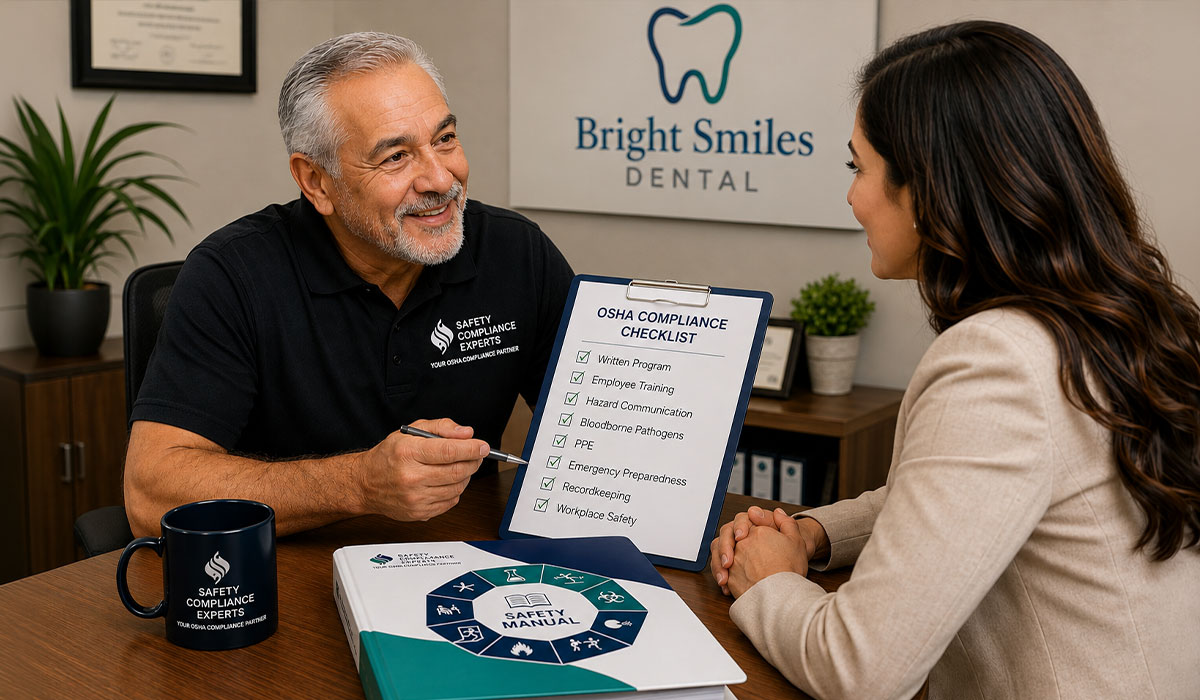
Depending on the program and the practice’s needs, our services can include:
- Customized OSHA manuals and written safety programs tailored to the practice and its operations.
- Comprehensive facility inspections using a detailed compliance checklist to identify potential deficiencies and recommendations.
- Annual in office employee training and certification covering applicable OSHA and California workplace safety requirements.
- Review and organization of required compliance documentation and records.
- Required and custom safety signage, labels, and workplace postings supplied as applicable.
- Annual updates to manuals, forms, documentation, labels, signs, and other program materials as applicable to the service agreement.
- Follow up support and compliance consultations throughout the year.
- Emergency support for clients who need assistance when an inspection, complaint, or urgent compliance issue arises, subject to the services included in their agreement.
Our Compliance Guarantee
For qualifying clients enrolled in the Safety Compliance Experts OSHA Compliance Guarantee Program, the agreement includes a written compliance guarantee relating to OSHA fines associated with matters within the scope of what Safety Compliance Experts provided or should have covered under the program, subject to the specific terms, conditions, exclusions, and limitations of the signed agreement.
The guarantee is intended to give clients an additional level of confidence in the completeness of the compliance services provided. It does not mean that a practice can never receive a citation, and it does not prevent Cal/OSHA from exercising its independent enforcement authority. Safety Compliance Experts is not an insurance company, and the guarantee should not be understood as insurance or as a promise that a government agency will not issue a citation.
The Real Value is Preparation
The goal is not to “beat” an OSHA inspection. The goal is to maintain a compliance system that is current, documented, implemented, and understood by the people working in the practice. When an inspection occurs, that preparation can make the process more organized and can help the practice respond with accurate information.
Final Thoughts
An OSHA or Cal/OSHA inspection does not have to catch a practice completely unprepared. Knowing how the inspection process works, identifying the person responsible for handling an inspection, maintaining current documentation, training employees, and reviewing the facility on a regular basis can significantly improve a practice’s readiness.
For healthcare practices, compliance is an ongoing process. The strongest programs are customized to the workplace, reviewed regularly, documented carefully, and supported throughout the year.
About Safety Compliance Experts
Safety Compliance Experts provides OSHA and HIPAA compliance services for healthcare practices, including dental, medical, and veterinary practices. Our programs are designed to provide customized documentation, training, facility compliance reviews, ongoing support, and program updates so practices have a structured system for managing compliance.
To learn more about our OSHA Compliance Guarantee Program and how we help healthcare practices stay prepared, contact Safety Compliance Experts.
Important Disclaimer
This article is provided for general educational and informational purposes and is not legal advice. OSHA and Cal/OSHA requirements can vary based on the employer, workplace, job duties, exposures, industry, and other circumstances. No article or compliance program can substitute for a review of the specific facts and applicable requirements. Government agencies retain independent authority to investigate, inspect, issue citations, assess penalties, and determine compliance. Practices with legal questions about an inspection, citation, subpoena, warrant, or appeal should consult qualified legal counsel.
Sources and Further Reading
- U.S. OSHA, California State Plan: https://www.osha.gov/stateplans/ca
- Cal/OSHA, What to Expect from a Cal/OSHA Inspection: https://www.dir.ca.gov/dosh/dosh_publications/What-to-expect-from-inspection.pdf
- California Department of Industrial Relations, Guide to Cal/OSHA: https://www.dir.ca.gov/dosh/dosh_publications/osha_userguide.pdf
- Cal/OSHA, File a Complaint / Inspection Information: https://www.dir.ca.gov/dosh/Complaint.htm
- U.S. OSHA, State Plans FAQ: https://www.osha.gov/stateplans/faqs
Regulatory Review Note for Publishing
Content in this draft was checked against current official OSHA and Cal/OSHA sources, including the California State Plan materials, the Cal/OSHA inspection guide, inspection procedures, and applicable healthcare workplace violence resources. The article deliberately avoids promising that a practice will never receive a citation or that a consultant can control a government agency’s enforcement decision.